Driving with a damaged window is stressful. A rock hits the glass, leaving a star or bullseye crack. Many drivers ignore this damage, hoping it stays small. Temperature changes and road vibrations cause these chips to spread. When this happens, a simple fix becomes impossible.
Getting professional windshield repairs quickly saves your glass from shattering. What exactly do technicians do when you bring your car into the shop? The process relies on specialized tools and chemical resins. Technicians don’t just fill a hole; they restore the structural integrity of the glass. Understanding this process helps drivers feel confident in the service.
Assessing the Glass Damage
Before work begins, the technician must inspect the damage. Not all chips and cracks are fixable. The technician checks the size, depth, and location of the impact. If the crack reaches the edge, the structural integrity of the entire window is compromised. In severe cases, replacement is the only safe option. If the damage is contained to the outer layer, the technician proceeds. Modern vehicles use laminated glass. This means a layer of plastic sits between the glass layers. Successful windshield repairs rely on this inner plastic layer remaining intact. The technician uses a probe to feel the chip. They check for loose glass and determine if the impact crushed the plastic layer. They also look at the shape of the break. Different types of cracks require different approaches. Once the technician confirms the glass is safe to fix, they explain the process to the owner. It’s crucial to set expectations. The goal is restoring strength, not making the glass look brand new. A blemish usually remains visible.
Preparing the Impact Area
Preparation is the critical part of the process. If the area isn’t perfectly clean and dry, the resin won’t bond properly. The technician starts by cleaning the glass around the chip. They wipe away dirt, debris, and chemical treatments like rain repellents. Next, they focus on the crater itself. Using a sharp pick, the technician scrapes out loose shards of glass. Leaving broken glass inside the chip creates air pockets later. Sometimes, the technician uses a drill. They drill a shallow hole into the center of the impact. This creates a clean passageway to the plastic core, ensuring resin flows freely into every crack. Moisture is the enemy of effective windshield repairs. Water trapped inside the glass ruins the chemical bond. If the car was recently washed, the technician uses a heat source to evaporate hidden moisture. Once the area is dry and cleared of debris, the technician places a bridge tool over the impact zone. This tool secures to the glass using suction cups, centering the injector nozzle over the chip crater.
Injecting the Specialized Resin
With the bridge secured, the filling process begins. The technician loads clear liquid resin into the injector. This resin mimics the optical properties and strength of auto glass. The injector creates a vacuum seal over the chip. This vacuum pulls trapped air out of the cracks. Air bubbles are the reason amateur windshield repairs fail, as they leave weak spots in the glass. After pulling the vacuum, the injector forces the liquid resin down into the cavity under pressure. The technician watches to ensure resin flows into every leg of the crack. They might flex the glass from the inside of the vehicle. Pushing slightly on the glass opens the micro-cracks, allowing resin to penetrate deeper. The technician cycles between vacuum and pressure several times. This alternating action guarantees all air escapes and resin fills the entire void. Quality windshield repairs depend heavily on this alternating pressure cycle. Once the cracks turn invisible, the technician knows the resin has penetrated the damage. They remove the injector assembly from the glass. A drop of thicker pit resin is then placed on top of the impact crater to seal the surface.
Curing and Final Polishing
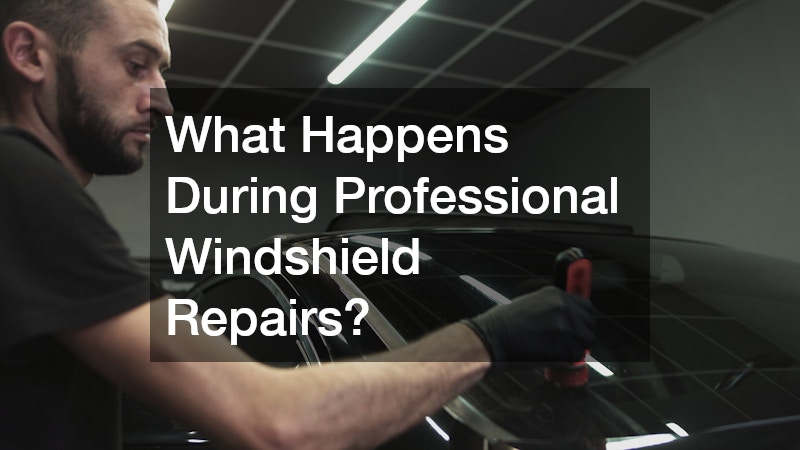
The resin is still liquid when the injector is removed. It needs ultraviolet light to harden. The technician places a clear plastic curing tab over the pit resin. This tab keeps oxygen away, allowing it to cure properly. Then, they position an ultraviolet lamp over the repair zone. The ultraviolet light causes a chemical reaction, hardening the liquid resin quickly. Once the resin is completely solid, the technician removes the lamp and peels away the plastic tab. The surface of the glass now has a hardened bump of excess resin. Using a razor blade, the technician scrapes the glass flat. The blade removes excess resin without scratching the surrounding window. Finally, the technician applies glass polish to the area. They buff the surface until it matches the surrounding glass. This polishing step restores a smooth surface so your wipers don’t catch on rough edges. The window is structurally sound and ready for the road.
Ignoring broken auto glass puts your safety at risk. A small chip can quickly become a large crack that requires a full replacement. Choosing to get professional windshield repairs early saves money and keeps factory glass intact. The process is precise, relying on vacuum pressure, resins, and ultraviolet curing. Technicians ensure the structural integrity of your vehicle remains uncompromised. Driving away with a safe, strong window brings peace of mind.